


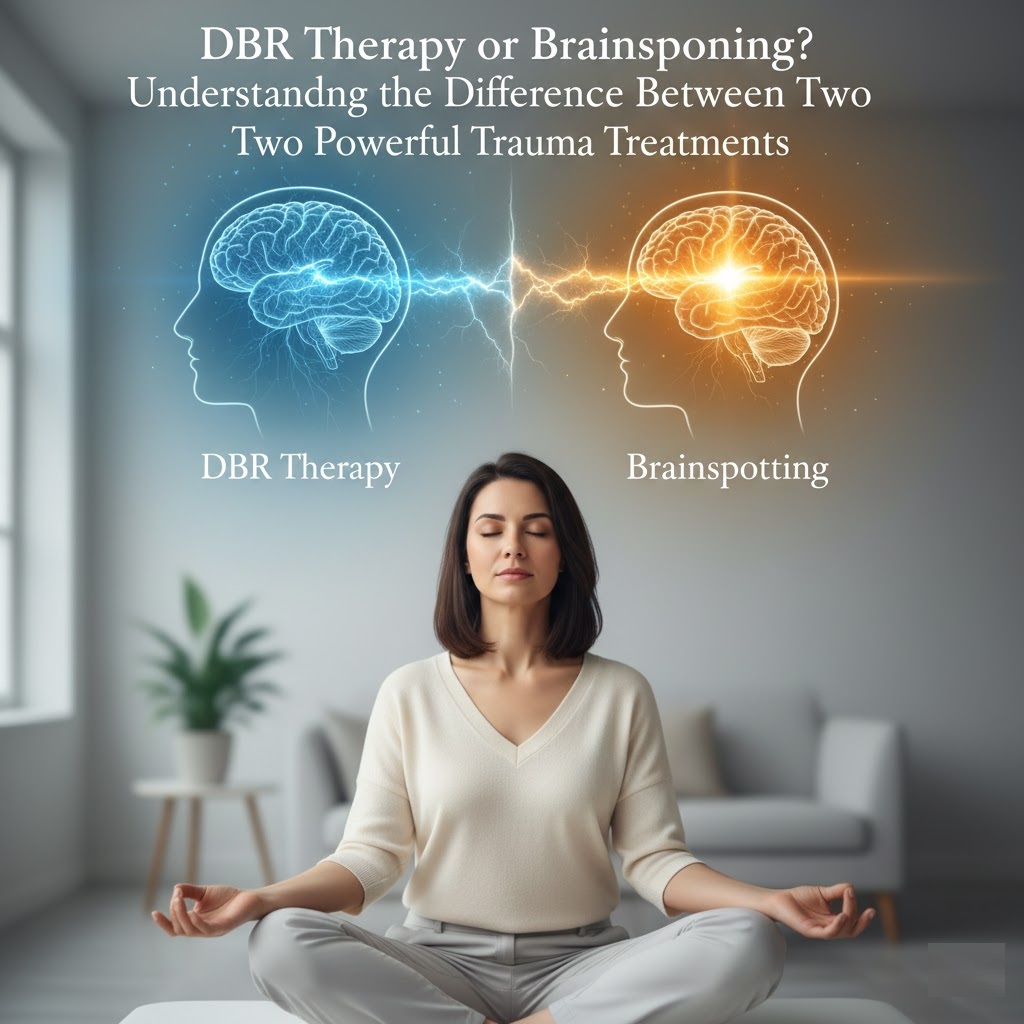
When it comes to healing trauma or injuries, not all treatments work the same for different kinds of patients. As each patient is different from the other and so are their responses to each approach. Therefore, before you take on a treatment method advised by your therapist, it is important to understand the difference between DBR therapy and Brain spotting. While both aim to resolve trauma and emotional distress, they approach the brain and nervous system in distinct ways. Understanding their differences can help clients choose the approach best suited for their healing journey.
What is DBR Therapy?
Before you begin the treatment, it is always advisable to understand how it works and what to expect from the next treatment.
DBR therapy is a trauma-focused method that works by accessing and reorienting deep neural pathways associated with unresolved traumatic experiences. It often works on the earliest, often preverbal, moments of trauma stored in the brain. These moments can create ongoing emotional and physical tension, manifesting as anxiety, depression, or chronic stress.
However, a Deep brain reorienting therapist guides clients through subtle eye movements, bodily awareness, and narrative processing to gently release these stored traumatic energies. By doing so, the brain learns to reorganize its response to past trauma, promoting a natural state of safety and calm. DBR is especially helpful for individuals whose trauma is deeply rooted in early life experiences or for those struggling with complex PTSD.
What is Brainspotting Therapy?
On the other hand, Brainspotting therapy is another trauma-focused approach that identifies brain spots, specific eye positions that correspond to unresolved emotional or physical trauma. Developed by Dr. David Grand, Brainspotting works by directing attention to these spots while engaging the body’s natural processing abilities.
It works on the core principle of the body where trauma is often stored in the body and brain, bypassing conscious awareness. By locating and focusing on brainspots, a therapist helps clients access and process emotions and memories that may be causing current symptoms. Brainspotting is often used for performance anxiety, PTSD, and emotional regulation challenges, and it emphasizes the integration of cognitive, emotional, and somatic experiences.
The Key differences between the two:
While both approaches work on the target of unresolved trauma, the approaches differ in focus and methodology:
Targeted Trauma Stage
DBR Therapy: Works with pre-verbal trauma and the earliest emotional imprints.
Brainspotting Therapy: Focuses on trauma stored in neural pathways that can be accessed visually.
Therapeutic Technique
DBR Therapy: Emphasizes guided attention to subtle physical and emotional cues within the body.
Brainspotting Therapy: Uses eye positions and gaze to activate trauma-related neural networks.
Session Experience
DBR Therapy: Involves gentle tracking of internal sensations with verbal guidance.
Brainspotting Therapy: Focuses on maintaining eye positions while observing emotions and bodily sensations.
Types of Trauma Addressed
DBR Therapy: Effective for early developmental trauma and deeply rooted emotional imprints.
Brainspotting Therapy: Effective for both recent and historical trauma, performance anxiety, and stress-related conditions.
Healing Outcomes
DBR Therapy: Helps integrate fragmented emotional memories and fosters a sense of safety within the self.
Brainspotting Therapy: Supports emotional release, insight, and neurological processing of trauma.
Which Therapy is Right for You?
Choosing between DBR Therapy and Brainspotting Therapy depends on your personal experiences and goals. However, it varies from one person to another. If your trauma stems from early developmental experiences or feels pre-verbal and deeply rooted, DBR Therapy may be the most effective choice. If your trauma is linked to specific events, visual triggers, or performance-related stress, Brainspotting Therapy may provide faster emotional processing.
It is important to note that many therapists in Toronto integrate elements of both therapies, creating a customized approach that maximizes healing. Consulting with a trained DBR Therapist or Brainspotting Therapist can help determine which method aligns with your needs.
To conclude, both DBR Therapy and Brainspotting Therapy offer innovative, evidence-based ways to process trauma and promote mental wellness. Understanding the differences between these approaches empowers clients to make informed decisions about their healing journey. Whether you choose DBR, Brainspotting, or a combination of both, the ultimate goal remains the same: to help your brain, body, and mind process trauma safely, effectively, and fully.